Foundry / Architecture / Enterprise AI
Microsoft Foundry Architecture Podcast
Enterprise AI with Microsoft Foundry: secure AI architecture, model selection and routing, RAG, agents, observability and the trade-offs you run into during customer conversations.
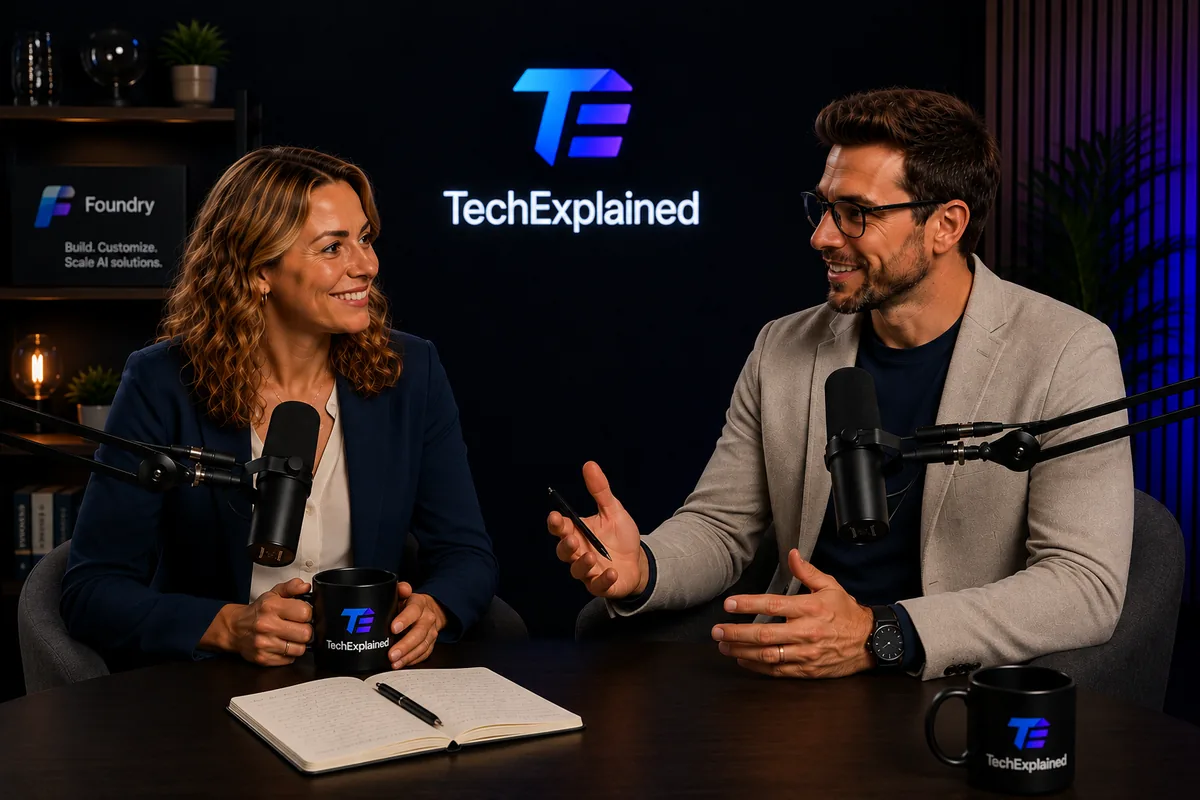
11 episodesavg. 20 minLast update: 24 August 2026EnglishPodcast hosts Laura Bennett and Mark Sullivan
Now playing
Episode 1.10 - Microsoft Foundry Architecture: RAG and Knowledge Grounding with Azure AI Search
0:000:00
Sign in to track your progress automatically in My Learning Journey.
All episodes
Also on SpotifyPractice what you learned
Apply the concepts from this episode right away in the Architecture Lab.
- Designing a reliable RAG architectureFind where retrieval quality is actually won.
- Copilot or FoundryMatch the AI platform to the requirement.
- Build a secure enterprise RAG assistantAssemble the components a regulated customer needs.
Knowledge check
Open the Architecture Lab Question 1 of 6
A bank asks: we already have a large language model, so why do we need an entire platform like Microsoft Foundry? What is the podcast's core argument?
Question 2 of 6
A retailer handles 400,000 AI interactions a day, with peaks up to three times that during sale events. A team routes every question, even the simplest, to the most expensive frontier model. What is the problem with that approach, and what is the alternative from the podcast?
Question 3 of 6
An organization has high, predictable AI traffic with a strict latency requirement, for example around a planned peak like Black Friday. Which deployment choice fits best, and why not the other option?
Question 4 of 6
A RAG assistant built on Microsoft Foundry gives confident but incorrect answers, even though the source documents contain the correct information. Investigation shows the retrieval step returns very large chunks that each mix several unrelated topics. What is the most likely fix?
Question 5 of 6
A Foundry-based agent will answer questions using internal SharePoint documents, where different departments should not be able to see each other's content. What must the retrieval architecture guarantee to prevent cross-department data exposure?
Question 6 of 6
A Foundry-based RAG solution needs to keep improving as new documents are added every week. What is the most effective way to make that improvement measurable and deliberate rather than guesswork?
Learn more?
Go deeper on the same topic.
How-tos
How to build an agentic application with Fabric and FoundryFrom governed data in Microsoft Fabric to an agent in Microsoft Foundry that answers questions about it, with the decision that shapes the architecture at every step.How Microsoft partners can become a Frontier PartnerFrontier Transformation asks more of a partner than an AI page on the website. This is the route: your own organization first, then a knowledge foundation, agents around real workflows, governance from day one and a business model that holds up.How to estimate the cost of a Foundry agent or a Copilot agentA costing method for agents: which meters run on each platform, how to work through tokens, retrieval and tools, and the costs everyone forgets.
Use cases
ISV: embedded generative AI for legal document automationA legal software vendor builds a fully embedded generative AI solution on Microsoft Foundry that automates document processing, data extraction, and draft generation for law firms.Manufacturing: domain-driven lakehouse with a voice-first sales copilotA chemical manufacturer replaces a monolithic data warehouse with a domain-driven Fabric architecture using OneLake shortcuts, then builds a voice-first sales copilot that cuts account prep from hours to minutes.Government: Sovereign policy assistant with Microsoft FoundryA ministry surfaces internal policy corpora through a RAG agent in an isolated project, with EU region, private networking and strict guardrails.
Do you have a similar challenge?
Use the podcasts as inspiration, or share your own Data & AI challenge with us.